


FDA
Latest News

February 8th 2024
By Davy James
Gilead announced it will discontinue the clinical development of magrolimab for hematologic cancers after the drug in combination with azacitidine plus Venclexta showed an increased risk of death related to infections and respiratory failure in patients with acute myeloid leukemia.

Vepdegestrant Granted FDA Fast Track Designation for ER-Positive/HER2-Negative Breast Cancer
By Davy James

FDA Accepts sBLA for Opdivo Regimen Based on Promising Survival Data From CheckMate -77T Trial in NSCLC
By Davy James
Advertisement
Latest Videos




Advertisement
More News

The supplemental Biologics License Application for Arexvy was based on positive data from the Phase III NCT05590403 trial, which analyzed the immune response and safety of Arexvy in individuals 50-59 years of age with an elevated risk of respiratory syncytial virus-related lower respiratory tract disease.
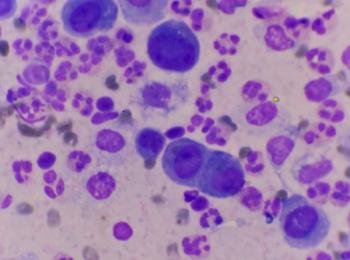
Data from the Phase II Nivolumab and Ipilimumab Plus/minus UV1 vaccination (NIPU) clinical trial show UV1 off-the-shelf cancer vaccine plus ipilimumab (Yervoy) and nivolumab (Opdivo) improved survival in patients with unresectable malignant pleural mesothelioma.

Efineptakin alfa, the only clinical stage long-acting human interleukin-7, is currently being evaluated in Phase I/II clinical trials in combination with pembrolizumab (Keytruda) for patients with advanced solid tumors, including pancreatic cancer.

Biosyngen’s BST02 is a cell-based immunotherapy that began clinical trials in October 2023 for all types of liver cancer.

Afami-cel was developed to target the MAGE-A4 protein in synovial sarcoma, which comprises 5% to 10% of soft tissue sarcomas.

The manufacturing process for CAR T-cell therapies is vital in preparing a patient’s cells for a one-time cell therapy infusion that is specifically tailored to meet each patient’s needs.
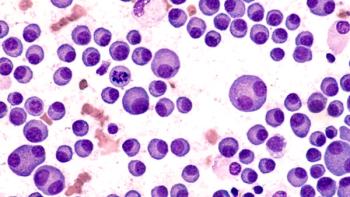
Darzalex Faspro with bortezomib, lenalidomide, and dexamethasone for induction and consolidation therapy and in combination with maintenance lenalidomide found to improve survival in patients with multiple myeloma who are eligible for autologous stem cell transplant.

The Padcev/Keytruda combination produced statistically significant and clinically meaningful improvements to survival compared to platinum-containing chemotherapy in first-line treatment of adults with previously untreated locally advanced or metastatic urothelial cancer.

Phase II TRANSCEND FL and Phase I TRANSCEND NHL 001 trial data lead to FDA Priority Review designation for Breyanzi to treat relapsed or refractory follicular lymphoma and mantle cell lymphoma.

Intravenous immunoglobulin Gammagard Liquid approved by the FDA to treat neuromuscular disability and impairment in adults with chronic inflammatory demyelinating polyneuropathy.

The Priority Revew designation was based on findings from the ongoing, global, multicenter, multi-cohort, open-label Phase II DESTINY-PanTumor02 trial of of Enhertu for patients with previously treated HER2-expressing tumors, including biliary tract cancer, bladder cancer, cervical cancer, endometrial cancer, ovarian cancer, pancreatic cancer, and other tumor types.

Approval based on findings from the Phase III EoE KIDS trial, in which 66% of patients administered a higher dose of Dupixent based on weight achieved histological disease remission.

Zynrelef was the first dual-acting local anesthetic approved by the FDA with a fixed-dose combination of bupivacaine and meloxicam.

Theratechnologies said it will address the concerns raised in the FDA’s complete response letter and will continue to seek approval for the new formulation of tesamorelin for the treatment of lipodystrophy in patients with HIV.

The FDA made the decision to require boxed warnings on CAR T-cell therapies based on reports of T-cell malignancies in patients administered BCMA- or CD19-directed autologous CAR T-cell immunotherapies.

FDA accepts biologics license application from Autolus Therapeutics for obecabtagene autoleucel to treat adults with relapsed or refractory B-cell acute lymphoblastic leukemia.

NK010 is a non-genetically modified natural killer cell therapy that dislayed significant potential in inhibiting strong tumor growth on ovarian cancers in animal studies.

Osteoboost was previously granted FDA Breakthrough Device Designation to treat diminished bone health in postmenopausal women with osteopenia.
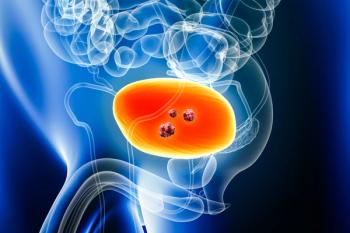
Balversa (erdafitinib) is a fibroblast growth factor inhibitor granted accelerated approval by the FDA in April 2019 for adults with locally advanced or metastatic urothelial carcinoma with susceptible FGFR3 genetic mutations whose disease progressed on or following one line of systemic therapy.

Data from the NETTER-2 trial show that first-line treatment with Lutathera plus long-acting release octreotide lowered the risk of disease progression or death by 72% in patients with advanced gastroenteropancreatic neuroendocrine tumors.

The Phase III LUNAR trial (NCT02973789) is evaluating the addition of tumor-treating fields to standard-of-care therapies in patients with non-small cell lung cancer following disease progression on or after platinum-based treatment.

FDA Fast Track Designation precedes an acceleration of enrollment in a Phase I trial of NX-5948 in adults with relapsed or refractory chronic lymphocytic leukemia or small lymphocytic lymphoma following at least two lines of therapy that includes a BTK inhibitor and a BCL2 inhibitor.

Findings from ADVANCE-CIDP 1 and ADVANCE-CIDP 3 trials lead to FDA approval for HyQvia as a maintenance therapy to protect against relapse of neuromuscular disability and impairment in adult patients with chronic inflammatory demyelinating polyneuropathy.

Casgevy is a non-viral, ex vivo CRISPR/Cas9 gene-edited cell therapy that was also recently approved for sickle cell disease.

The 39th overall approval for Keytruda was based on data from the Phase III KEYNOTE-A18 trial in patients with FIGO 2014 stage III to IVA cervical cancer.
Advertisement
Advertisement
Trending on Applied Clinical Trials Online
1
SCOPE Summit 2026 Keynote Panel: Is Radical Acceleration in Clinical Research Possible?
2
SCOPE Summit 2026 Panel Discussion: Diversity in Clinical Trials—What’s Working, What’s Next
3
Accelerate Clinical Trials with AI-Enhanced Financial Management
4
SCOPE Summit 2026: Reducing Patient Burden Is the Foundation of Wearable Success in Oncology
5