Latest Conference Coverage

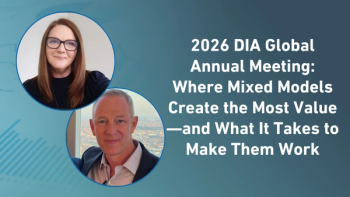
In this video interview from the 2026 DIA Global Annual Meeting, Nick Scott of Biogen and Samantha Hadfield of Thermo Fisher Scientific, discuss where mixed outsourcing models deliver the greatest gains in efficiency and agility, and why a deliberate, partnership-first approach is what separates successful implementations from ones that struggle.
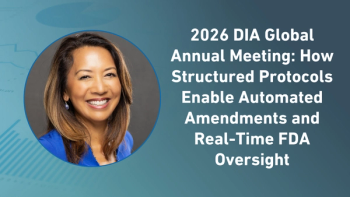
In this video interview from the 2026 DIA Global Annual Meeting, Angie Maurer, VP of AI-enabled clinical development at Medable, describes how digitizing protocols transforms manual amendment workflows into automated, AI-orchestrated processes—and why structured data from the start is the foundation the FDA's continuous review model depends on.

In this video interview from the 2026 DIA Global Annual Meeting, Stacy Hurt, chief patient officer at Parexel, explains how federated AI is expanding what's possible in oncology research, why the patient voice gets lost earliest in development, and why someone in every organization needs to explicitly own patient needs from the very beginning.

Sponsored Content

In this video interview from the 2026 DIA Global Annual Meeting, Ittai Dayan, co-founder and CEO of Rhino Federated Computing, explains how data fragmentation limits AI in clinical trials, what federated learning can and cannot solve, and what sponsors actually need to deploy these approaches at speed.

In this video interview from the 2026 DIA Global Annual Meeting, Kevin Bugin, head of global regulatory policy and intelligence at Amgen and executive sponsor of TransCelerate's Embedded Pragmatic Trials initiative, reframes the FDA's continuous review expectations around real-time evidence generation and explains why quality by design—not data cleanup—is what regulators are now demanding.

In this Q&A, Abraham Gutman, founder and CEO of AG Mednet, discusses why the clinical trial industry has mastered data capture but never built the execution architecture needed to act on it, how the right infrastructure changes the role of human experts, and why enthusiasm for agentic AI is outrunning what clinical trials can realistically support.

Sponsored Content

In this video interview, Nick Frenzer, general manager of site solutions at Veeva Systems, discusses why eSource has been difficult to implement at scale, how FHIR-based technology is changing that, and what Veeva eSource means for sites, sponsors, and the broader clinical trial ecosystem.

Sponsored

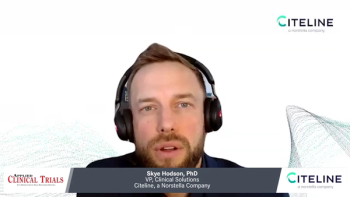
In this interview, Skye Hodson, PhD, of Citeline, explains how longitudinal, patient-level insights across the full care journey are helping sponsors overcome enrollment delays, investigator scarcity, and protocol complexity—transforming strategy into execution-ready deliverables that optimize feasibility, site selection, and measurable recruitment outcomes.

Holly Leslie, vice president of services at Ledger Run, discusses how persistent payment friction, increasing administrative burden from AI-generated queries, and lack of sponsor accountability are pushing sites to become more selective—favoring sponsors that pay transparently, reduce operational strain, and treat site experience with the same rigor as patient recruitment.