




Clinical Operations & Strategy
Latest News
Advertisement
Latest Videos

Shorts
0:47
Translational Medicine's Growing Role in IBD Research
a month ago
by
Kori Wallace, MD, PhD(+2 more)
0:54
The New Era of Drug Development: Speed Over Science?
a month ago
by
Stella K. Vnook, PhD(+1 more)
0:42
Why Execution is Never Just 'Plug and Play'
2 months ago
by
Elizabeth Walsh, PMP, ACRP-CP(+1 more)
1:45
ACT Ops Take: Improving Clinical Development Productivity
4 months ago
by
Andy Studna, Senior Editor
0:40
Why I Chose Clinical Trials: A Statistician's Story
4 months ago
by
Sam Hinsley(+1 more)
0:45
Why the Shift to Patient-Centric Clinical Trials is Crucial
7 months ago
by
Miriam Dervan
0:35
ESG is No Longer Optional: It's a Readiness Test
7 months ago
by
Otis Johnson, PhD, MPA(+1 more)
0:58
The Hidden Cost of Efficiency in Clinical Trials
8 months ago
by
Liz Beatty(+1 more)
0:32
Why Marketers Use Reddit vs. TikTok for Healthcare Audiences
9 months ago
by
Christian Bullock(+1 more)
0:30
Why Safety Risk Should Be as Important as Efficacy in Trials
a year ago
by
Ananth Kadambi(+1 more)
Advertisement
More News
Advertisement

AI platforms that absorb trial data reconciliation could compress operations toward a small, accountable team.

Biomarker-informed trial enrollment appears straightforward for identifying responders and optimizing efficiency, but failures to account for demographic variation in cut-off selection, causality versus correlation, and composite biomarker complexity risk excluding viable patients and exacerbating disparities.

As trials grow more global and complex, fragmented financial systems are becoming a liability. Connecting them with AI is the next operating model for clinical trial finance.

In this episode of Beyond Compliance, Otis Johnson, PhD, MPA, founder and principal consultant at Vantix Operations, speaks with Joel Stanley, CEO of AJNA BioSciences, about why botanical therapies need pharmaceutical-grade standardization and clinical evidence to earn physician trust and insurance coverage.

In this Q&A, Stella K. Vnook, PhD, CEO and executive chair of Kaida BioPharma and founder and CEO of Aviva Ventures, discusses how a trifecta of funding pressures is reshaping early-stage clinical development, why commercialization readiness can no longer wait until late-stage, and what a truly strategic lean development model looks like in practice.
In this episode of Beyond Compliance, Otis Johnson, PhD, MPA, founder and principal consultant at Vantix Operations, speaks with Joseph Kim, Chief Strategy Officer at ProofPilot, and Lauren Briggs, Chief Customer Officer at ProofPilot, about why completing training is not the same as being prepared to execute a protocol.

Clinical research coordinators face early burnout driven by gaps between job expectations and operational reality, inadequate mentorship structures, and fragmented technology environments that compound insufficient onboarding and deplete resources needed to sustain engagement.
In this Q&A, Elizabeth Walsh, PMP, ACRP-CP, founder of Walsh Clinical Advisory and co-author of The Clinical Execution Blueprint, discusses the persistent misconceptions about sponsor accountability, why execution gaps originate long before study startup, and what genuine inspection readiness looks like when it is built in from the outset.

As agentic AI, automated data harmonization, and real-time monitoring reshape clinical development, the organizations seeing meaningful results are those that have invested in unified data infrastructure and disciplined governance rather than cycling through pilots without the foundation to scale them.
In this pilot episode of Beyond Compliance, Otis Johnson, PhD, MPA, founder and principal consultant at Vantix Operations, speaks with Paulo Limgenco, VP of business operations and ESG strategy lead at YPrime, about how sustainability is shifting from a compliance checkbox to a factor that shapes vendor selection, client trust, and long-term business value.
Advertisement
Clinical development operates as an integrated system where dependencies persist across phases and vendors, but treating contracts as execution handoffs creates invisible oversight gaps that surface later as vendor performance problems, timeline slips, or inspection findings.

Clinical R&D modernization stalls through incremental optimization of individual workflows, but meaningful systemic change requires leaders to visualize structural relationships, understand hidden incentives, and identify leverage points that benefit the whole system rather than parts.

The evolving role of medical affairs in connecting patients, physicians, and evidence generation.
Protocol assumptions about patients, visit schedules, timelines, and vendors are rarely tested against operational reality until startup, but early engagement of experienced execution strategists can identify and mitigate feasibility gaps before commitments harden into expensive course corrections.

From real-time evidence generation to federated AI to site-level data integration, ACT spoke with seven experts at DIA 2026 on the trends and challenges defining clinical trial operations today.

Discover how Quest Diagnostics puts its vast database of lab results to work and leverages patient and physician credibility to efficiently and effectively connect the best-fit patients to the clinical trials that will benefit from their participation.

Discover how Quest Diagnostics’ comprehensive lab data can elevate your clinical trials. Our latest white paper, "6 Ways Lab Data Can Improve Clinical Trials," explores the power of real-world data at every stage of the trial process.

As the clinical research landscape evolves, decentralized clinical trials (DCTs) have emerged as a foundational competency, enabling broader patient participation, increasing trial efficiency, and driving more inclusive, real-world data collection. However, the successful execution of DCTs requires more than just innovative technology—it demands a comprehensive strategy that addresses the unique challenges of decentralization.

Download the case study and learn how Quest Diagnostics and PatientsLikeMe helped accelerate recruitment and enrollment for a struggling study.
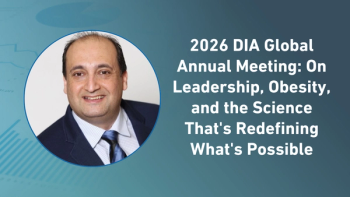
In this video interview, Marwan Fathallah, president and CEO of DIA Global, makes the case for ecosystem-wide leadership in a time of regulatory uncertainty and highlights the breakthroughs in obesity, healthcare AI, and cell and gene therapy that have most excited him in 2026.
Beyond Revenue Recognition: Rethinking CRO Contracting Through the CURED Shared Performance Contract
Traditional CRO contracting models create misalignment between effort, progress, and financial outcomes, driving revenue recognition risk and margin volatility, but shared performance contracts linking costs to deliverables can improve transparency and accountability.

In this video interview from the 2026 DIA Global Annual Meeting, Nick Scott of Biogen and Samantha Hadfield of Thermo Fisher Scientific, discuss where mixed outsourcing models deliver the greatest gains in efficiency and agility, and why a deliberate, partnership-first approach is what separates successful implementations from ones that struggle.
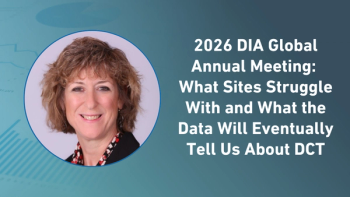
In this video interview from the 2026 DIA Global Annual Meeting, Joan Chambers, independent senior consultant at Tufts CSDD, examines the operational challenges sites face when implementing DCT components and makes the case that the industry is still in a learning phase—one the data will ultimately need to guide.

In this video interview from the 2026 DIA Global Annual Meeting, Nick Scott of Biogen and Samantha Hadfield of Thermo Fisher Scientific, explain why mixed FSP models are becoming a strategic tool for sponsors seeking greater agility and how geography and portfolio structure shape the decision.
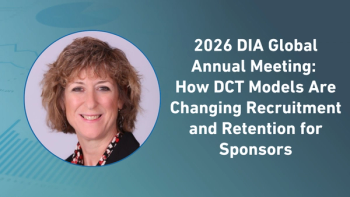
In this video interview from the 2026 DIA Global Annual Meeting, Joan Chambers, independent senior consultant at Tufts CSDD, explains how the flexibility and accessibility of decentralized trial modalities are expanding patient reach—and why fit-for-purpose deployment is key to making them work.
Advertisement
Advertisement
Trending on Applied Clinical Trials Online
1
The Execution Gap: Why Clinical Trial Infrastructure Has to Be Built Before AI Can Deliver
2
Why Patient Input Comes in Too Late—and What Earlier Engagement Changes
3
Lab Orchestration Is Not What You Think It Is
4
Recruitment in the Age of AI: Q&A with John Worden, Javara
5