

Metrics & Benchmarks
Latest News
Oct 26, 2026 | Commentary
How Much of the Community Participation Gap Is About Infrastructure, Not Willingness?

Measuring What Matters: Realigning Clinical Endpoints with Patient Reality
Oct 26, 2026

Aardvark Shares Data From Stopped Prader-Willi Trial as FDA Lifts Hold
Oct 23, 2026

Clinical Trials Do Not Have a Data Problem, They Have a Decision-Readiness Problem
Oct 23, 2026
ACT Brief: Orchestrated AI Clinical Environments, eSource Coordinator Satisfaction, and Faster Clinical Trials Act
Oct 23, 2026

Advertisement
Shorts
0:43
AI An Enrollment Game Changer?
3 days ago
by
Michael Christel(+1 more)
0:44
Transforming Clinical Development with Embedded AI
5 days ago
by
Rajneesh Patil(+1 more)
1:31
2026 Veeva R&D and Quality Summit
6 days ago
by
Andy Studna, Senior Editor
0:42
2026 SCRS Global Site Solutions Summit: What Does this Year’s Summit Say About Where the Industry is Right Now?
10 days ago
by
Nicholas Jacobus(+1 more)
0:43
2026 SCRS Global Site Solutions Summit: Concerns & Excitement Around Where Clinical Research is Heading
10 days ago
by
Nicholas Jacobus(+1 more)
0:34
2026 SCRS Global Site Solutions Summit: The One Conversation the Industry Can't Ignore
11 days ago
by
Jennifer Byrne(+1 more)
0:50
2026 SCRS Global Site Solutions Summit: What’s Got You Most Excited About Where Clinical Research is Headed?
11 days ago
by
Kyle McAllister(+1 more)
0:38
Why Reliable AI Starts With Data, Not Algorithms
19 days ago
by
Saamir Pasha(+1 more)
0:46
How AI is Revolutionizing Clinical Trial Design
a month ago
by
Claire Riches(+1 more)
0:50
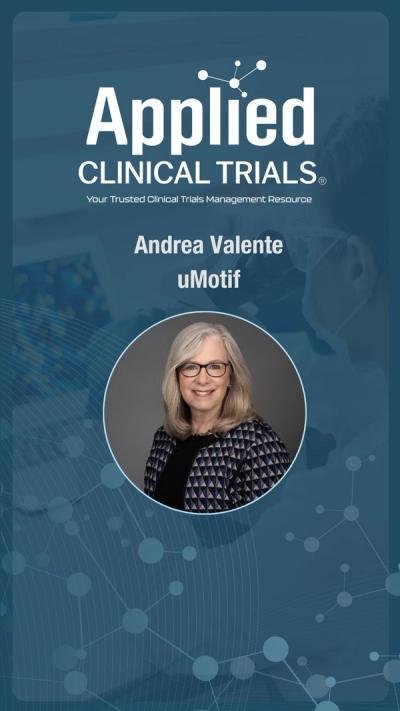
Building Trust in Clinical Trials: A Key Dimension for Success
a month ago
by
Andrea Valente(+1 more)
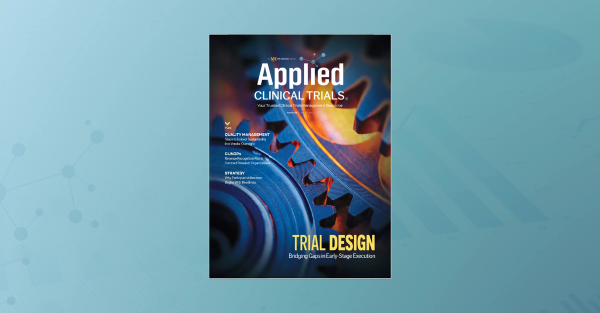
Applied Clinical Trials June 2026
Check out the latest features and columns!
Revenue Recognition Risk in Contract Research Organizations
Managing financial integrity in a complex, milestone-driven operating model.

When Does Paper Make Sense for Clinical Outcome Assessment Data Collection?
Despite clear data quality and regulatory advantages, paper-based clinical outcome assessments persist due to cost asymmetry, trial complexity, startup timelines, and provider capability gaps.

Podcasts
Videos

Advertisement
All News
Advertisement

The Faster Clinical Trials Act would create an FDA Center for Clinical Trial Innovation and aims to cut trial costs and enrollment time by at least 30%.

Standardized measurement across five oncology centers found that clinical research coordinators rated eSource-enabled workflows positively (Overall Mean Satisfaction 5.79 of 7), with reduced manual entry and electronic data transfer earning strong marks, while perceived reduction in sponsor and monitor queries lagged as the one domain below threshold.
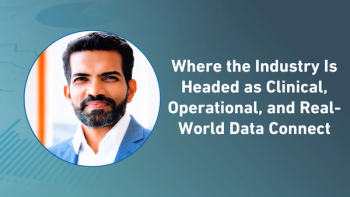
In this video interview, Rajneesh Patil, global head of AI, digital, and innovation in clinical development at Syneos Health, describes the industry’s trajectory toward a unified intelligence orchestration environment—and explains why the future isn’t one model that knows everything, but a trusted system that brings the right evidence to the right human decision.
In today’s ACT Brief, we examine how sites can avoid both fear-driven and overly aggressive AI adoption, why community-based research needs sustained financial investment, and why patient access matters more than organizational size.

Pacing obesity trial enrollment, anchoring eligibility to stable real-world therapies, and building site and physician relationships improve retention and data quality more than aggressive recruitment or restrictive exclusion criteria do.
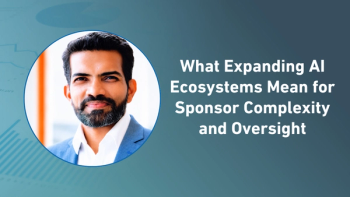
In this video interview, Rajneesh Patil, global head of AI, digital, and innovation in clinical development at Syneos Health, argues that CROs must act as orchestrators rather than aggregators—and that the real test of any AI ecosystem is whether it reduces sponsor coordination burden or just hands it back to them.

Syneos Health and Optum outline a joint model for trial planning, recruitment and site access, with no financial terms or timelines disclosed.

AstraZeneca and Oracle Outline AI Collaboration for Clinical Trial Recruitment and Safety Monitoring
What sponsors and sites should know about the AstraZeneca-Oracle AI collaboration on trial recruitment, safety monitoring and data governance.
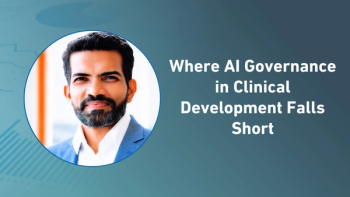
In this video interview, Rajneesh Patil, global head of AI, digital, and innovation in clinical development at Syneos Health, identifies three recurring failure modes in AI governance frameworks—and explains why responsible AI must be an ongoing operating discipline, not a one-time approval gate.
CRIO’s chief innovation officer, Mike Wenger touches on the two ways sites get AI adoption wrong.
Advertisement
CRIO’s Mike Wenger, speaker at this year's SCRS summit, maps how sites are actually deploying AI post-pilot stage.
In this video interview, Rajneesh Patil, global head of AI, digital, and innovation in clinical development at Syneos Health, explains why the real advantage of faster data isn’t speed—it’s shortening the distance between signals, human judgment, and the next best action.
In today’s ACT Brief, we examine how AI is moving into continuous clinical operating models, how trust is built into oncology real-world evidence, and how the FDA approved a self-administered option for thyroid eye disease.
Paradigm’s Kurt Mussina discusses why scale should drive operational efficiency, not consolidation into single-site studies.
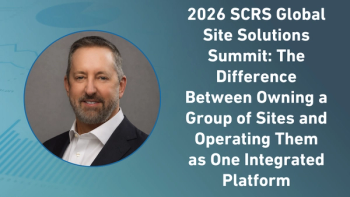
Paradigm’s Kurt Mussina touches on why he rejects the “site management organization” model in favor of one unified business.
Advertisement
Advertisement
Trending on Applied Clinical Trials Online
1
Clinical Trials Do Not Have a Data Problem, They Have a Decision-Readiness Problem
2
Building Standardized Evidence for eSource-Enabled Clinical Trials: Multi-Site Validation of a Clinical Research Coordinator Satisfaction Methodology
3
Where the Industry Is Headed as Clinical, Operational, and Real-World Data Connect
4
ACT Brief: Orchestrated AI Clinical Environments, eSource Coordinator Satisfaction, and Faster Clinical Trials Act
5