




Technology
Latest News
Advertisement
Latest Videos



Advertisement
More News
Exploring how large-scale patient databases and AI analytics can accelerate site activation, strengthen recruitment, and improve trial design from the start.

Thermo Fisher will integrate OpenAI APIs into its Accelerator Drug Development platform and clinical research business, while Lundbeck deploys ChatGPT across its global workforce to drive R&D and commercial innovation.

Addressing the imbalance in clinical trial workloads by empowering mid-level investigators and using AI to expand access to high-quality, diverse research leadership.

Examining how artificial intelligence can help identify true key opinion leaders in emerging markets to improve site influence, patient engagement, and trial success.

As decentralized and hybrid trial models expand, eConsent is emerging as a critical tool for improving participant understanding, reducing site burden, and strengthening data integrity through digital automation, accessibility, and regulatory compliance.
How a unified approach to clinical data management, powered by artificial intelligence and advanced analytics, can elevate clinical trial monitoring and redefine how teams assess, act on and learn from data.
Learn how early regulatory engagement, validated digital systems, and robust protocol design enable biotechs to run parallel studies without compromising compliance or data integrity.
As pharma wrestles with whether to trust fully autonomous AI, semi-autonomous agents are emerging as a safer middle ground that reduces manual work, eliminates white space in clinical development, and accelerates trial timelines without compromising patient safety.

Uncover how improving data accuracy and leveraging synthetic control arms can optimize trial efficiency, reduce costs, and generate stronger real-world insights.

Sustainability should be central to clinical trial design and considerate of how digital tools such as electronic clinical outcomes assessments can help achieve this.

Examine strategies for validating, monitoring, and safely deploying configurable AI agents to ensure compliance and performance in clinical trials.

Capturing insights from clinical research professionals on the key trends and challenges shaping drug development today, from those in clinical trial operations and site relationships, to technology and AI, and the evolving regulatory and policy terrain.

Take a closer look at how agentic AI can automate repetitive monitoring tasks while keeping human oversight central to critical decision-making in clinical research.

Regulatory inspections of interactive response technology systems have surged 140% since 2022, signaling intensified global scrutiny of data integrity, randomization, and system validation in clinical trials.
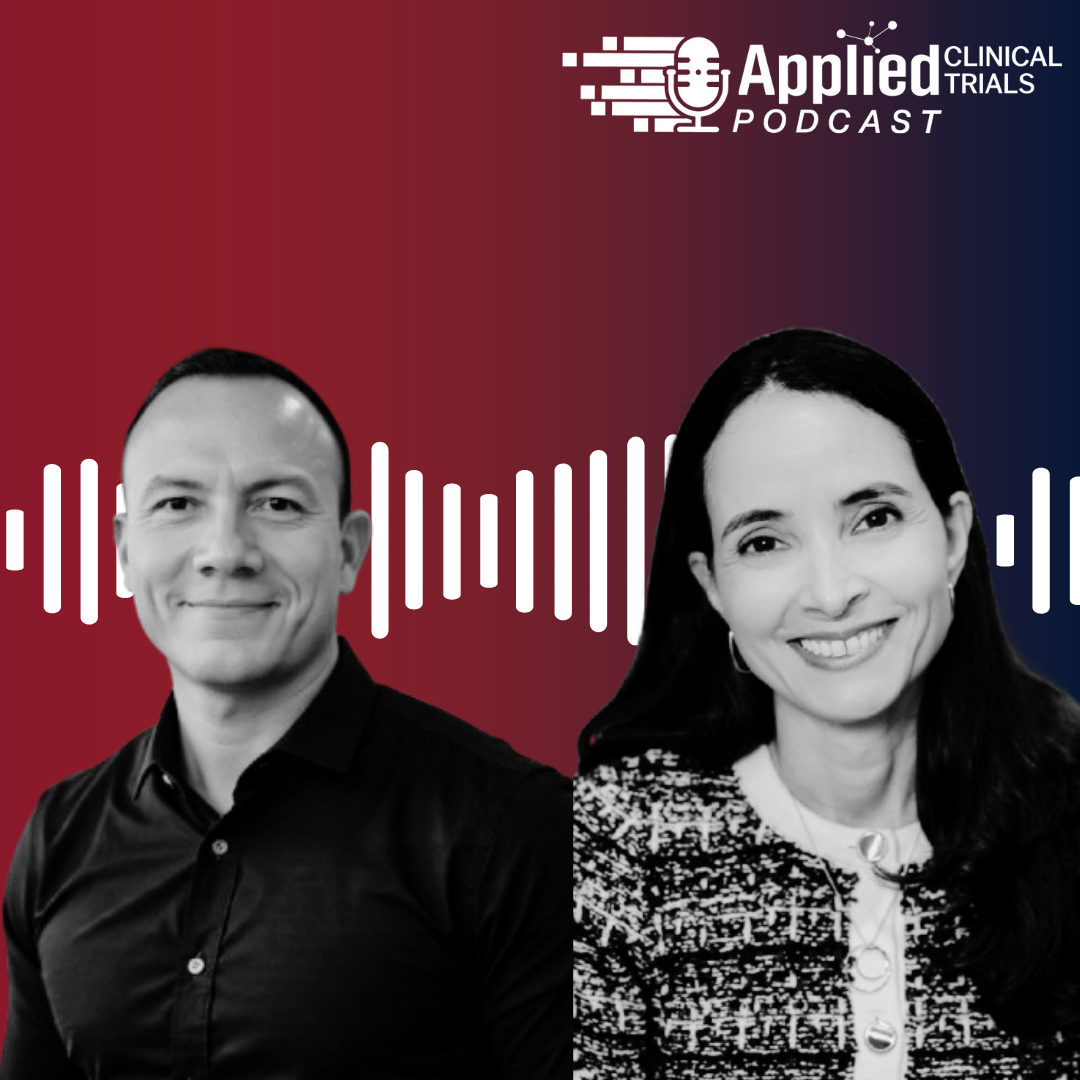
In this episode of the ACT Podcast, we highlight a recent Q&A featuring Ibrahim Kamstrup-Akkaoui, vice president of data systems innovation at Novo Nordisk; and a feature article by Chris Driver, senior director of product management, Patient Suite at IQVIA, in which they both highlight how sponsors are adopting automation to streamline operations.
Gain perspective on how agentic AI can bridge eCOA, EDC, IRT, and CTMS platforms to reduce manual effort and improve operational efficiency.
Understand how adaptive human-in-the-loop frameworks can maintain safety and decision quality as AI becomes more embedded in trial monitoring and data review.

The convergence of AI, decentralized technologies, behavioral science, and real-world evidence opens the door to a new era in which the clinical trial industry proactively addresses participation barriers, integrates social determinants of health, and reimagines patient centricity.
Gain insight into how AI-powered agents can eliminate inefficiencies, shorten development timelines, and free clinical teams to focus on strategic decision-making.
Discover how early site involvement, streamlined training, and AI-driven tools can simplify system complexity and enhance efficiency in clinical trials.

Learn how internal infrastructure, cultural buy-in, and workflow-focused technology choices can strengthen collaboration and reduce site burden in clinical trials.
Learn how integrated platforms, single sign-on tools, and streamlined training approaches can reduce site burden while supporting compliance and study startup.
Learn how the lack of integration across platforms creates complexity for sites and why holistic solutions are key to reducing data entry and system burden.
2025 SCRS Global Site Solutions Summit: How Sites Can Overcome Technology Burdens in Clinical Trials
Steve Rosenberg, CEO, uMotif, discusses the challenges sites face with eCOA, eConsent, and ePRO platforms and the support needed to reduce technical burdens.

Remote monitoring solution for cytokine release syndrome paves the way for more consistent patient care, a deeper understanding of immune responses, ultimately widening patient access to life-saving immunotherapy and reducing recruitment barriers in clinical trials.
Advertisement
Advertisement
Trending on Applied Clinical Trials Online
1
SCOPE Summit 2026 Keynote Panel: Is Radical Acceleration in Clinical Research Possible?
2
SCOPE Summit 2026 Panel Discussion: Diversity in Clinical Trials—What’s Working, What’s Next
3
Accelerate Clinical Trials with AI-Enhanced Financial Management
4
SCOPE Summit 2026 Keynote Fireside Chat: Aligning Purpose, Innovation, and Operational Excellence in Clinical Development
5