

Clinical trial for BI 3034701 is expected to evaluate the safety, tolerability, and pharmacokinetics in healthy men and overweight or obese individuals aged 18-55 years old.
Clinical trial for BI 3034701 is expected to evaluate the safety, tolerability, and pharmacokinetics in healthy men and overweight or obese individuals aged 18-55 years old.
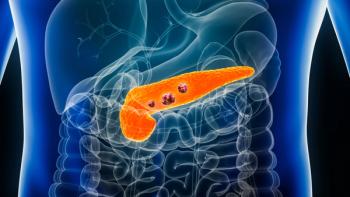
Preliminary results from study of small interfering RNA drug candidate, STP707, indicated the average days for stable disease in patients was 92.

Pamela Tenaerts, MD, MBA, chief scientific officer, Medable; Luke Gelinas, PhD, senior chair director, Advarra; and Pam Diamond, MD, chief medical officer & co-founder, Curavit highlight the potential impact FDA's Diversity Action Plan guidance will have on industry.

The trial aims to address the limitations of first-generation COVID-19 vaccines in preventing infections and milder diseases.

Preliminary Phase II trial data showed tobevibart and elebsiran combination achieved high rates of virologic response.
Pamela Tenaerts, MD, MBA, chief scientific officer, Medable; Luke Gelinas, PhD, senior chair director, Advarra; and Pam Diamond, MD, chief medical officer & co-founder, Curavit share their initial thoughts on the announcement of FDA's Diversity Action Plan guidance.

Reportedly, data from the Vivacity-MG3 trial marks the first time an FcRn blocker demonstrated superiority over placebo in treated generalized myasthenia gravis (gMG).

Results showed significant reduction in plasma levels of neurofilament light chain after one year of treatment, a key biomarker of nerve cell damage in relapsing MS.

In the fifth and final part of this video interview, Diane Lacroix, vice president, clinical data management, eClinical Solutions looks to the future and touches on what the use of AI in clinical trials could like in five years.
In part 4 of this video interview, Diane Lacroix, vice president, clinical data management, eClinical Solutions discusses what industry stakeholders should be keeping top of mind when integrating AI into their workflows.

A three-part framework for a more comprehensive conceptual model of patient experience data can provide a more rounded understanding of patient experiences in clinical trials and beyond.

Phase III trial data shows significant survival benefit with Rybrevant plus Leclaza compared to Tagrisso in the treatment of patients with previously untreated or Tagrisso-pretreated epidermal growth factor receptor–mutated advanced non–small-cell lung cancer.

Almost 90% of centers reported shortages for at least one type of systemic therapy.
In part 3 of this video interview, Diane Lacroix, vice president, clinical data management, eClinical Solutions touches on some of the greatest benefits she has seen with the integration of artificial intelligence into data management.

Phase III trial results show a greater proportion of children aged one to 11 years administered a weight-tiered higher dose of Dupixent achieved a significant improvement across multiple key disease measures for eosinophilic esophagitis compared to placebo.

Guidance provides details to assist medical product sponsors in submitting Diversity Action Plans.
In part 2 of this video interview, Diane Lacroix, vice president, clinical data management, eClinical Solutions highlights how artificial intelligence can help industry keep pace with the increasing complexity of data.

Phase III SURMOUNT-OSA trial data show positive impact of tirzepatide in patients with moderate-to-severe obstructive sleep apnea and obesity.

CAR T cell therapy candidate will be evaluated in Phase I multicenter, open-label clinical trial.
In part 1 of this video interview, Diane Lacroix, vice president, clinical data management, eClinical Solutions discusses the current landscape of data collection in clinical trials and the growing complexity of protocols.

Imfinzi (durvalumab; AstraZeneca) combined with chemotherapy led to a statistically significant and clinically meaningful improvement in event-free survival and overall survival compared with neoadjuvant chemotherapy in patients with muscle-invasive bladder cancer.

Recent study reviewed how often patient-reported outcomes were being used as primary endpoints in randomized studies.

Up to 51.5% of participants met the criteria for disease resolution.

Omnipod 5 Automated Insulin Delivery System shows improvements in blood glucose outcomes and overall quality of life among patients with type 2 diabetes.
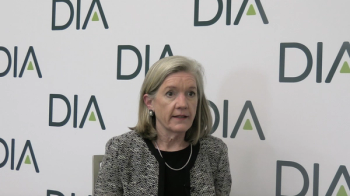
In an interview with ACT editor Andy Studna at DIA 2024, Beakes-Read, head, global regulatory policy and intelligence, Johnson & Johnson Innovative Medicine highlights the integration of technological advancements into drug development and benefits patients are seeing from FDA's Accelerated Approval Program.

The activation of each clinical trial involves hundreds of tasks, along with many dependencies and handoffs, some of which may be automated, but many require manual processes.

Tremfya (guselkumab) subcutaneous induction therapy shows positive findings for the treatment of adult patients with moderately to severely active Crohn disease.

In an interview with ACT editor Andy Studna at DIA 2024, Cuff Shimooka, chief operating officer of TransCelerate Biopharma touches on how collaboration will be key to innovation in clinical research moving forward.

As clinical research continues to globalize and grow at pace, there is a risk that global greenhouse gas emissions will escalate unless mitigation strategies are actively included in corporate strategies.

Breakout session discusses the impact of incorporating decentralized elements into oncology clinical trials on data integrity, patient safety, and regulatory approvals.